Science
Good Intentions Are Not Always Wise: The Problem of Street Feeding
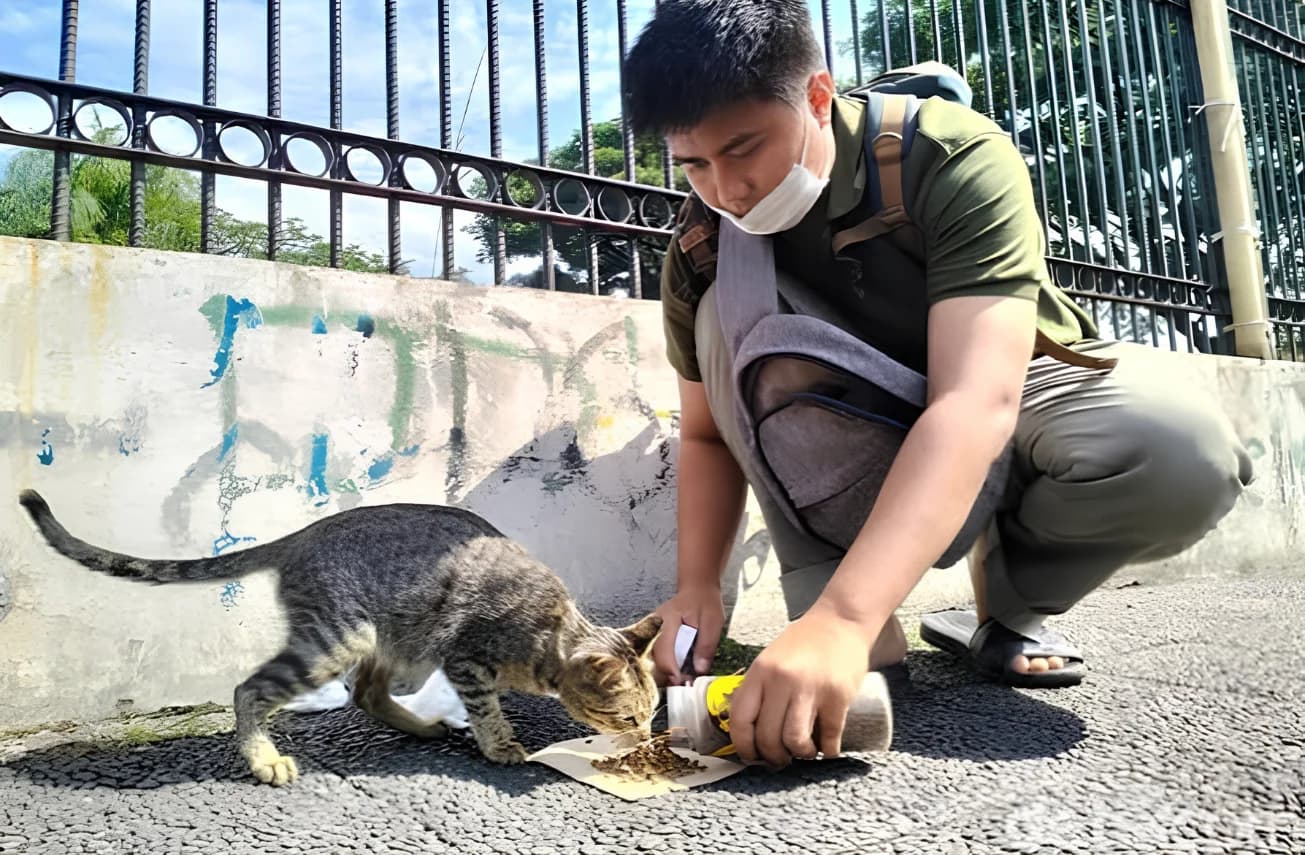
This article discusses street feeding, the practice of feeding stray animals such as stray cats and dogs, from the perspective of empathy as well as its long-term impact on populations, ecosystems, and the spread of disease. The author emphasizes that good intentions must be accompanied by knowledge and responsibility.
PROLOGUE
There is a sight that almost always touches our humanity: someone stops at the roadside, takes out a packet of food, and gives it to a skinny cat hiding under a car. Elsewhere, someone regularly brings food for a dog sleeping in front of a row of shops. There are also people who willingly spend their own money to make sure animals living on the streets do not go to sleep hungry. Actions like this are born of one of the noblest basic human traits: "EMPATHY".
In the midst of urban life, which often keeps people busy with their own affairs, caring for abandoned living creatures is valuable. For animals that struggle to find food, such help can mean a chance to survive.
However, from another point of view, a question arises that is perhaps rarely asked: "does helping one or two animals today also have a good impact on those animals, the environment and other living creatures in the long term?". It turns out that this question becomes important when we discuss street feeding.
Street Feeding according to the website azko.id means the activity of giving food to stray animals on the streets, often wild cats and dogs that have no owner. This activity is usually carried out individually or in groups by volunteers or animal lovers who care about the welfare of street animals.
The debate about this practice often gets trapped in two camps. On one side, those who feed are seen as compassionate people. On the other, they are seen as a source of environmental problems. In reality, the matter is far more complex than simply who cares and who does not.
Scientific research shows that supplementary feeding can affect behavior, habitat use, interactions between animals, and disease dynamics. Meanwhile, free-living cats and dogs can have ecological impacts, depending on their numbers, locations, behavior, and the condition of the ecosystem.
This means the issue of street feeding is not about forbidding empathy. The issue is understanding that good intentions do not necessarily produce good outcomes if they are not accompanied by knowledge and responsibility.
Compassion without knowledge is like a torch that lights the road yet burns the house beside it
- Sayyidina Ali ibn Abi Thalib R. A -
When Animal Feed Becomes an Environmental Problem
Food made specifically for animals, whether dry kibble or wet food, is indeed formulated to be appealing to and meet the needs of cats and dogs. But when it is left out in the open and not eaten completely, the leftover feed does not simply disappear; it becomes a real source of problems.
Leftover kibble exposed to moisture will rot, grow mold, and give off a foul smell. This leftover feed attracts unwanted animals: rats, cockroaches, flies, and ants arriving in large numbers. As recorded in official data from the Macau local government, from 2025 to mid-2026, cleaning workers removed more than 4 tons of leftover food, including uneaten animal feed, from 89 stray animal feeding points scattered across residential areas. This figure shows how widespread an impact that often escapes our attention can be.
Dr. Hala Abdel Karim, a family medicine consultant, explains that animal feed placed regularly in one location creates a permanent food source for pests. "When rats find a food source available every day in one place, they will settle, breed, and spread throughout the surrounding neighborhood. The risk of disease transmission also expands," she said.
Feed washed into drains when it rains also has another impact: the leftover nutrients in the food can trigger the growth of moss and algae that clog waterways, increasing the risk of standing water and flooding in residential areas. What begins with the intention to feed, without our realizing it, also disturbs the balance of cleanliness and comfort in the environment where we all live.
The same applies to food containers left for a long time. Saliva residue and clinging food scraps become a nest for bacteria. A place that is supposed to feed animals instead becomes a place where diseases spread between animals.
The Risk of Disease Transmission Between Animals and Humans
Giving food made specifically for animals is indeed safer than giving human leftovers containing excessive seasoning or harmful ingredients. However, a feeding location that stays the same and is visited by many animals carries its own risks that must not be ignored.
When cats and dogs from all around gather at one spot to eat, they are in very close proximity. Healthy animals sit alongside sick ones, and germs move through the air, through touch, or through food containers used in turn. Contagious diseases such as panleukopenia in cats, distemper virus in dogs, and respiratory infections spread very quickly. One sick animal can infect dozens of other animals in a short time.
Dr. Sari Lestari, a veterinarian who has spent years treating domestic stray animals, voiced her concern in an interview with RRI.or.id: "I often see cats that are given fully nutritious food every day, yet still fall ill because they pass diseases to one another at the feeding spot. Good food is of no use if their immune systems are constantly battered by germs moving from one animal to another in the same container."
It is not only between animals; some diseases can also pass to humans, known as zoonotic diseases. Toxoplasmosis carried by cats, ringworm infections, and even cat scratch disease can be transmitted to residents, especially children who play around feeding sites, pregnant women, and the elderly, whose immunity is weak. Even more frightening is rabies, which has a fatality rate of nearly 100% once clinical symptoms appear, and this virus can infect almost all mammals, including cats.
So, even if the type of food given is appropriate, the way and the place it is given still determine whether the food is beneficial or instead becomes a means of spreading disease.
Population Explosion and Delayed Welfare
This is the hardest reality to accept, yet the most important to understand: a consistent food supply without population control will accelerate the growth in the number of stray animals on the streets.
When food is reliably available every day, the death rate among young animals drops, more of them grow to adulthood, and they breed faster. In a short time, the number of animals in one area can multiply many times over. What happens next? The available food, even in large quantities, cannot sustain all the newborn mouths. The animals still go hungry, only now there are far more of them and the competition among them grows fiercer.
Feeding without planning for the future is like watering a plant without making sure its roots are strong. What appears to flourish today may wither in misery tomorrow.
-Prof. Dr. Ir. Bambang Suryobroto, Animal Behavior Expert at IPB, at the National Seminar on Animal Welfare and Ecological Balance (Bogor 17/8/2026)-
The Asia for Animals Coalition emphasizes that unsupervised feeding actually puts animals in a more vulnerable position. Animals accustomed to receiving food from humans become overly dependent and lose the ability to forage on their own. If one day the feeding stops because the feeder moves away, falls ill, or runs out of money, they do not know how to survive by themselves. Those born on the streets are not equipped with enough hunting instinct or the ability to find natural food sources. As a result, deaths from starvation actually rise sharply.
In addition, an excessive number of animals on the streets increases the risk of being hit by vehicles, driven away harshly, or hurt by people who feel disturbed. We may save them from hunger today, but without sterilization and proper management, we are in fact preparing even greater suffering for their future generations.
Ecological Impact: Learning From Australia
The case in Australia is quite similar to the one we discussed in a previous article on invasive species (read >>> Invasi Alien Yang Nyata), and it is perhaps the dimension least often realized by those who practice street feeding. Irregular feeding affects not only the animals being fed but also changes the structure of the entire surrounding ecosystem. Animals whose numbers surge because of artificial food supplies will pressure other species, sometimes even to local extinction.
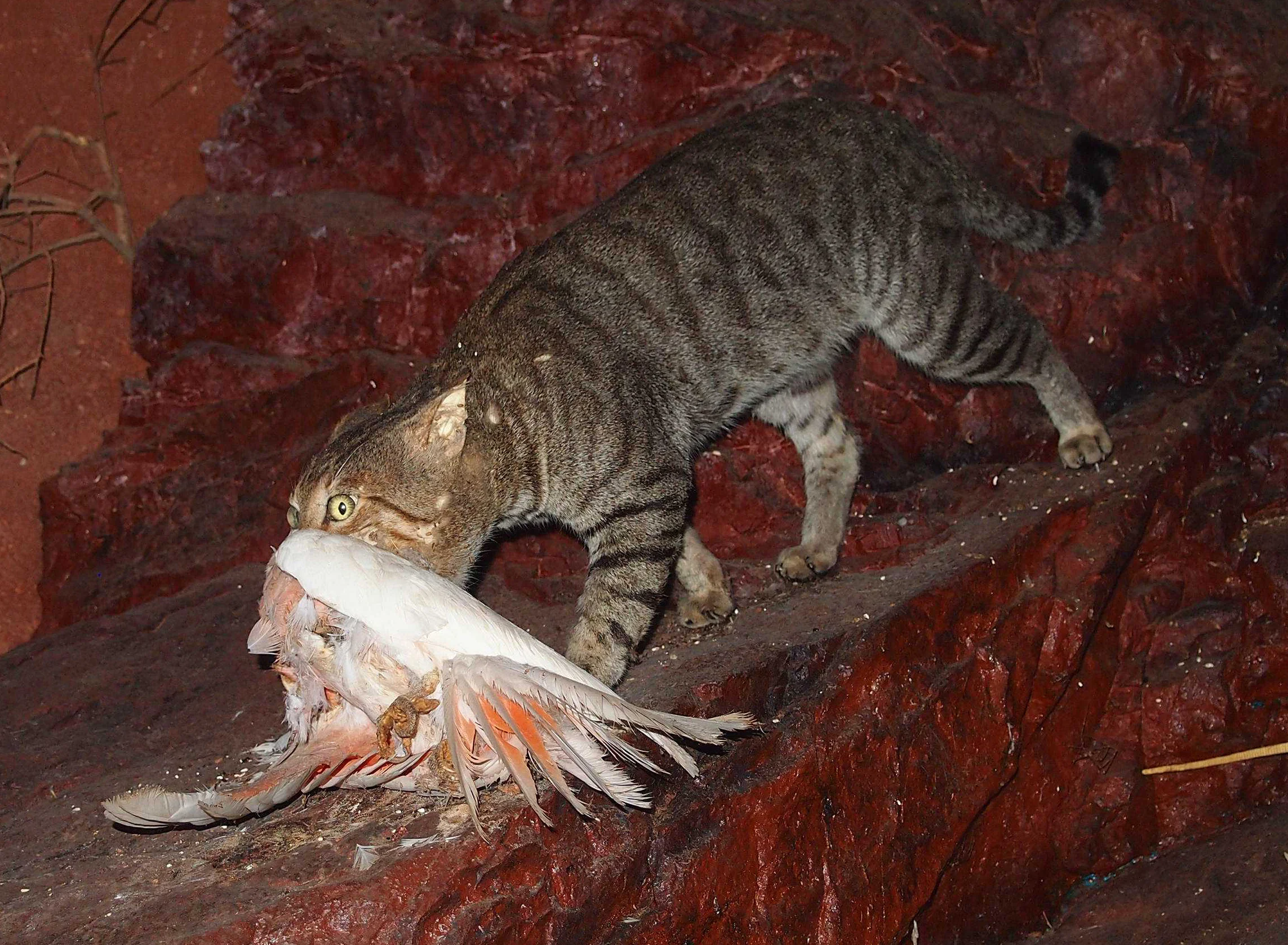
Australia provides the clearest picture of how feeding domestic stray animals can turn into an ecological disaster that destroys biodiversity. In a land isolated for a long time, native animals evolved without predators such as cats. As a result, they have no defense mechanisms against this swift and efficient hunter. Facts about the presence of feral domestic cats in Australia include:
Cats kill an average of 1.5 billion native animals every year in Australia, including mammals, birds, reptiles, amphibians, and invertebrates.
A single feral cat can kill up to 791 native animals per year in the wild.
Cats have played a direct role in the extinction of 20–25 native Australian mammal species and are a threat to more than 200 endangered species.
What needs to be understood is that feeding stray cats does not remove their hunting instinct. Cats keep hunting even when their stomachs are full; for them, hunting is not merely finding food but natural behavior. By feeding them, we ensure they stay alive, stay strong, keep breeding, and keep hunting every day in the surrounding environment.
From this, a number of chain-reaction problems will arise, among them:
Increased Predation Pressure — More cats means more native animals killed every day. Birds, small mammals, and reptiles that are already endangered are increasingly pushed out of their shelter and food sources.
The Food Chain Balance Shifts — The loss of insect-eating or seed-eating species alters soil fertility, seed dispersal, and even the number of insects in the environment.
Aggressive Species Take Over Territory — Feeding also benefits larger, more aggressive birds, so that small, native, vulnerable birds are continually driven from their habitat. In Australian residential areas, birds such as crows, noisy miners, and scavenger birds overpopulate while small birds disappear.
Disease Spreads to Wildlife — Domestic animals that gather together carry pathogens that can be transmitted to wildlife, which has no immunity to those diseases.
Deadly Dependence — Kittens born in environments where feeding takes place do not learn to hunt on their own. If the feeding stops, they not only starve, but are also unable to fill any ecological role in nature.
The government of the state of Victoria, Australia, states firmly in its official guidelines: "Feeding cats you do not own is the surest way to create a long-term problem. Feeding sustains breeding and keeps predators in the environment with no one taking responsibility".
When Good Intentions Become a Source of Social Conflict
We all certainly want a harmonious environment, a place where humans live side by side with animals. However, unregulated feeding often creates unnecessary tension instead.
When animals gather at one spot to eat, their territorial nature emerges. They guard that food source from other animals, and sometimes from passing people too. Many cases of scratches or minor attacks occur not because the animals are bad, but because they feel they must protect what they regard as their source of life.
Residents who live around feeding sites also have the same right to feel comfortable in their neighborhood. The smell of accumulated waste, the sound of animals fighting, damage to plants in the yard, and worries about children playing near where the animals gather are all legitimate concerns that deserve to be heard.
These concerns deserve to be heard with an open heart. Loving animals must not mean disregarding the well-being of fellow humans. True kindness must not hurt others, whether animals or humans.
Caring That Truly Benefits
So, does all of this mean we must stop feeding them? Must we let them go hungry? Of course the answer is "Not at all".
Precisely because we care, we must do it the right way — a way that does not damage the ecology, does not create a population explosion, and does not harm other creatures. There are concrete steps we can take so that our compassion truly counts:
Combine feeding with a sterilization program. This is the most important step, because feeding without controlling the number of births is like filling a jar with a hole in the bottom. With sterilization, the animal population can be kept under reasonable control, so that every animal receives adequate attention and food and the pressure on surrounding wildlife is reduced. Such programs have often been carried out by animal activists and lovers, such as Yayasan Peduli Liar Indonesia (YPLI), under the name TSL/TNL (Tangkap - Steril - Lepas / Trap - Neuter - Return).
Channel assistance through official shelters or foundations. Institutions with structured programs will place animals in a safe location, provide health care, and look for adopters.
If you feed in your neighborhood, do so with full responsibility. Place food in a covered spot that other animals cannot reach, make sure leftover food and containers are cleaned up immediately, choose a location that does not disturb residents, and make sure the animals are sterilized so they do not breed and add to the ecological pressure.
Understand the impact behind the food bowl. Every animal that is fed still hunts. If there are protected or threatened wildlife in your area, the presence of cats supported by artificial food can be a direct threat to them.
Invite others to take part. Kindness done together is far stronger than kindness done alone. The more people who understand how to help properly, the more animals whose lives change for the better.
Being an animal lover is not measured by how often we put food at the roadside, but by how responsible we are for their future and for the impact they have on the entire environment.
— Dr. Agus Setiawan, Chair of the Yayasan Sahabat Satwa Indonesia foundation, at the National Meeting on Managing Domestic Feral Animal Populations (Surabaya, 2/9/2026) -
EPILOGUE
A heart moved to feed helpless creatures is a truly beautiful gift. In a world increasingly busy thinking only of itself, your care for them is proof that gentleness is still alive among us. Every grain of food you give is born of sincere compassion, and that deserves to be appreciated.
Yet let us pause for a moment and reflect: true compassion does not only think about what they need today, but also about what will sustain their lives tomorrow, and how their presence affects all the other creatures that share this earth.
In Australia, millions of innocent native animals lose their lives every year, not because they are weak, but because the balance of nature they depend on has been disrupted by predators whose numbers continue to be supported by human hands. Every small animal killed, every bird that disappears from the trees, every species slowly going extinct
In this article, the author does not intend to become a public enemy to animal lovers; the author is also a cat owner, and at the time this article was written my cat is 7 years old. But here the author tries to invite readers to think again about the impact that even a small step grounded in empathy, such as street feeding, can have.
Sometimes, we as nature lovers and animal lovers must treat animals like children. Love does not always mean saying yes to every request a child makes. Sometimes refusing a child's request is also a form of love, because we already know the consequences if we say yes. "Dad/Mom, I want a PS" - "No, son, a PS will distract you from the knowledge you should be learning at school". However, since a PS means nothing to animals, "of course", this can be likened to the street feeding we are discussing.
A gentle heart must be paired with a sharp mind, so that our compassion does not become a sword that wounds
- Buya Hamka -
References
Asia for Animals Coalition, n.d. World stray animals day: understanding the impact of street feeding. Bangkok: Asia for Animals. Available at: https://asiaforanimals.com [Accessed: 2 November 2026].
EWASH, n.d. What happens if you feed a stray? Available at: https://ewash.org [Accessed: 2 November 2026].
GOGI, n.d. The truth about street dog feeding. New Delhi: GOGI. Available at: https://gogi.in [Accessed: 2 November 2026].
Government of Victoria, n.d. Responsible pet ownership: feeding cats. Melbourne: State Government of Victoria. Available at: https://www.vic.gov.au [Accessed: 2 November 2026].
Invasive Species Council, n.d. Meet the invaders: cats. Melbourne: Invasive Species Council. Available at: https://invasives.org.au/meet-the-invaders/cats/ [Accessed: 2 November 2026].
Kompas, 2026. Pro-kontra street feeding, apa yang sebaiknya dilakukan? Ini saran ahli UGM. 21 March. Available at: https://kompas.com [Accessed: 2 November 2026].
Macao Regional Government, 2026. Press release: cleaning up leftover animal food at feeding spots. Macao: Governo de Macau. Available at: https://gov.mo [Accessed: 2 November 2026].
RRI, 2026. Kasih makan kucing liar, bijak atau bikin masalah? 15 April. Available at: https://rri.co.id [Accessed: 2 November 2026].
Threatened Species Recovery Hub, 2021. The impact of cats in Australia: findings factsheet. National Environmental Science Programme. Available at: https://www.nespthreatenedspecies.edu.au [Accessed: 2 November 2026].
UAEFeed, 2025. Haphazard feeding of stray cats and birds fuels pest infestations. Dubai: UAE Feed. Available at: https://uaefeed.com [Accessed: 2 November 2026].
Woinarski, J.C.Z., Legge, S.M. and Dickman, C.R., 2019. Cats in Australia: companion and killer. Melbourne: CSIRO Publishing.
Viva DIAZ