Science
The Light That Is Beginning to Fade
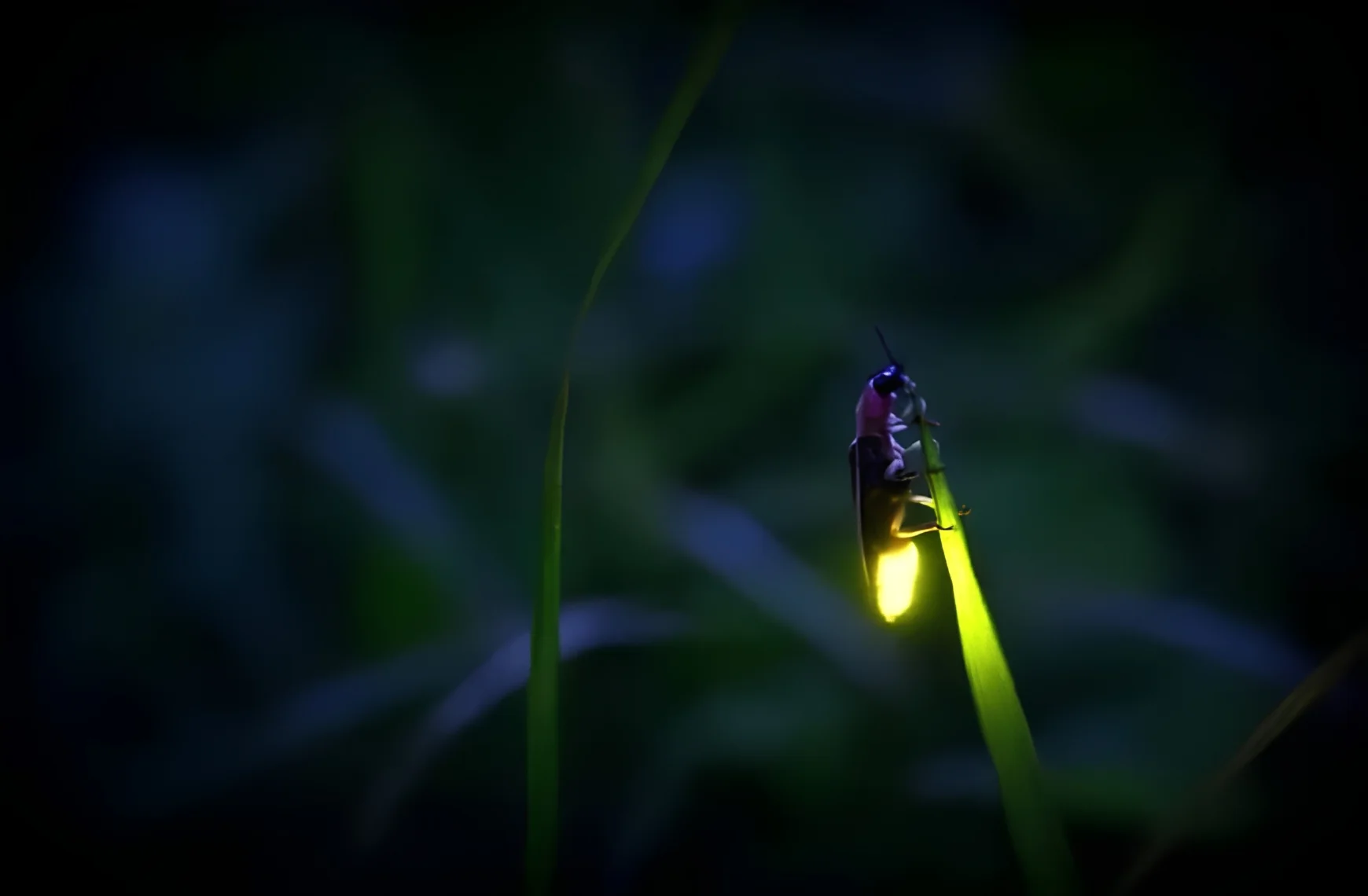
Where have they gone, those that our parents used to call "the fingernails of the dead"? What should we do now, when the night is no longer as dazzling as it once was?
PROLOGUE
I am reminded of when I was still going through basic nature-lover training in this organization (DIKLATSAR DIAZ XXXII), when night fell and the bivouac was already standing. I sat in front of the fire with one of my cohort-mates to keep watch over the others in case the trainers came. The forest was silent and dark, we did not know what the trainers had planned, but that night we stayed alert all the same.
Then, from behind the trees, we saw a flicker of light. "That's a headlamp," said my friend. The two of us hurried to warn the others that the trainers were about to arrive. But our warning was soon disputed by another friend after he saw the light: "It's just a firefly," he said. It turned out he was right, it was only a firefly, and because we had been absorbed in watching the fire, we had not noticed that all around us there were in fact many fireflies flying about. Perhaps exhaustion and low morale kept us from noticing that beauty, leaving only the alertness in our heads.
I myself was overjoyed to learn that there were so many fireflies around us. The last time I had seen them was when I was 8 years old, after my mother and I had finished the isha prayer at the prayer room, and even then there were only 2 of them. But that night, I saw many more.
I felt that joy because I had previously realized that their numbers were declining. My mother told me that in her childhood, fireflies were very abundant and were often collected as toys. Even more so when I learned of the fact put forward by scientists that we are the last generation that can still see them. I mean, I was grateful at that time because I could still see them, but at the same time sad because it might have been the last time for me. For that reason, from now on I will enjoy and cherish their light whenever I see it.
Perhaps you feel it too now. When we were children, at the edge of the rice fields, along the riverbank, or in a lush yard at home, the night was not completely dark. Thousands of tiny points of light blinked slowly, moving up and down as if stars had come down to touch the earth. We chased them, gazed at them in awe, and felt that this wonder would always be there.
But try looking out of your window tonight. "Where are they?"
A sight we once saw without exception has now become a memory that is increasingly hard to find. Fireflies are slowly disappearing from our nights, not by their own will, but because of the way we have changed the world they live in.
"Fireflies are not merely night decorations. They are a light that tells us the nature here is still healthy. When it goes out, it means something at its roots is damaged."
- Prof. Drh. Upik Kesumawati Hadi, Entomology Expert at IPB University
FIREFLIES AND WHY THEY ARE SPECIAL
In the past, we may have been afraid of fireflies because our parents told us they were the incarnation of the fingernails of the dead. This myth became more firmly lodged in our minds as children, because they could indeed be seen in cemeteries at night. Perhaps that was simply how our parents taught us to respect time, especially the night, when we ought to be studying.
Firefly is the common name for luminous beetles of the family Lampyridae of the order Coleoptera. The name Lampyridae itself is taken from the Greek "lampein," meaning "to shine." More than 2000 species of fireflies are recorded throughout the world except Antarctica. Although there is no official record, as a megabiodiverse country, most of them are probably also found in Indonesia.
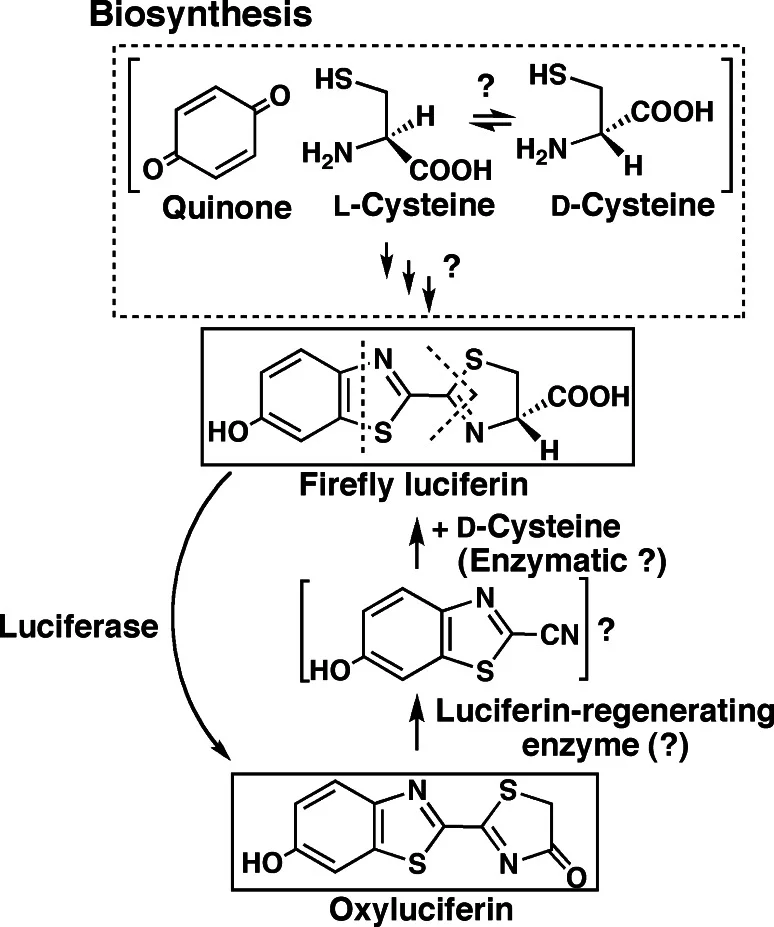
The unique ability that allows fireflies to glow is a biological process called bioluminescence. Bioluminescence in fireflies involves a chemical reaction of the compound luciferin in their abdomen. This compound is divided into two, namely D-Luciferin and L-Luciferin. When D-Luciferin reacts with ATP (Adenosine Triphosphate), or energy, and is then catalyzed (its reaction accelerated) by the enzyme luciferase, a further reaction with oxygen occurs that produces oxyluciferin. It is the reaction of this oxyluciferin that glows and makes the firefly's abdomen luminesce. What makes it special is that the light produced gives off almost no heat, unlike the light bulbs in our homes.
Not mere decoration, their light is a language of communication. The male blinks in a certain pattern, then the female hidden in the grass answers with a distinctive blink. Recognizing each other, calling to each other, finding each other in the darkness of night. Without that light, they cannot reproduce. "Quite romantic for a beetle, isn't it?"
Scientists even believe that the glow produced by fireflies is also used to protect themselves. Some firefly species contain the compound lucibufagin, which makes them taste bad to predators, although some animals such as frogs, toads and tarsiers seem unbothered when eating them. This defensive compound, lucibufagin, is not found in every firefly species; some of them obtain it by preying on other firefly species (those that have lucibufagin). So, the glow is also a warning that says "don't eat me, I'm a firefly that tastes bad".
Moreover, the reason fireflies are so special is the role they play for us, for humans and for nature:
Bioindicator of environmental health — Fireflies are creatures that are very sensitive to pollution and contamination. They are highly vulnerable and have a low tolerance for pollution. Firefly larvae (especially) depend heavily on a healthy ecosystem and environment. Therefore, their presence indicates clean water, moist unpolluted soil, and fresh air. If they disappear, it means the environment is no longer healthy.
Natural pest control — Experts are actually still not entirely sure what firefly species eat as adults. Some of them eat pollen and nectar, some eat other insects including other firefly species, and some are even known to eat nothing at all. However, experts are confident that firefly larvae are carnivores. Firefly larvae eat slugs, snails, and worms that often become agricultural pests. Thus, farmers are actually helped by them without realizing it.
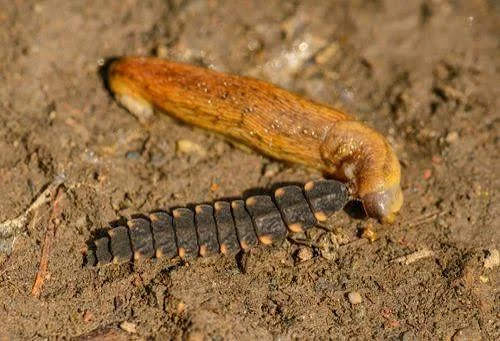
Part of the food chain — Being food for other animals is the fireflies' contribution to the ecosystem. Although the secretion of lucibufagin makes them unappealing to a number of predators, toads, frogs and some mammals such as tarsiers seem to have no problem with this defensive compound.
WHY DO THEY NO LONGER GLOW AT NIGHT?
Perhaps for those of you with a "mellow" heart like mine, this is the saddest part. Nowadays we rarely encounter them, and even I have very rarely seen them at the place where I did my training back then, as told above. This happens because fireflies have indeed begun to disappear.
The claim by scientists that we are the last generation able to see them, as I mentioned in the prologue, is according to the University of Georgia on the page site.extension.uga.edu an unfounded opinion, but it cannot erase the fact that they are truly becoming harder to see. Firefly populations are now declining all over the world. IUCN data show that 11–20 percent of the evaluated species are already in the threatened category, and some species such as Phontinus ponctulatus have gone locally extinct in Eastern Kansas and have not been seen since the 1960s. In the Southeast Asia region, including species typical of Indonesian mangrove forests, some have already been declared vulnerable to extinction.
Experts are still searching for a definite answer as to why this is happening, but according to most scientists there are 2 main factors, namely development and light pollution. Wet environments such as swamps, rivers, lakes, damp forest floors and other wet places have mostly become land exploited by humans.
The swamps that were once their homeland have mostly become residential areas or large buildings. Lakes have mostly become tourist spots that disturb their existence. Rivers too have become dirty, crowded and noisy. Yet, they are creatures that do not move elsewhere like other creatures when their habitat is deemed uncomfortable. In addition, because their tolerance for pollution is very low, they will find it hard to survive in urban areas.

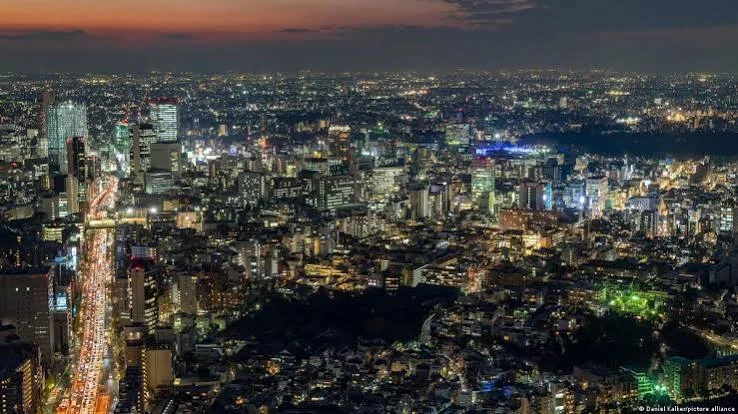
In addition, light pollution is a factor with an equally large impact on firefly populations around the world. As we have seen above, the glow of fireflies is a form of communication between males and females when they are about to mate. Light pollution can disrupt the synchronization of light communication between male and female fireflies. Research shows that light pollution can reduce reproductive success by more than 50 percent. There is even scientific evidence showing that fireflies often mistake the light from LED lamps for a reply from another firefly of the opposite sex. This means that the number of eggs that hatch will also be far fewer.
The use of pesticides and synthetic fertilizers in farming and plantations, as well as climate change, also contribute to their scarcity. Synthetic fertilizers and pesticides indirectly destroy their habitat and eliminate their natural prey. In addition, fireflies inhabit areas with high humidity, close to 90%. Climate change causes droughts to occur more often, temperatures to rise, and rainfall patterns to shift, drying out their homes. In some regions, populations drop sharply when the dry season lasts longer than usual.
WHAT IF THE GLOW DISAPPEARS FOR GOOD?
Imagining fireflies completely gone is deeply saddening to me personally, especially when I think about how many creatures we have already wiped from the face of the earth. The Javan Tiger, the Bali Tiger, the Zanzibar Leopard, the Baiji River Dolphin, the Pinta Island Tortoise, and many more.
But if we ask what would happen given that "they are just tiny insects that we don't even eat", then we are badly mistaken in our thinking. Losing them is not only about losing the beauty and aesthetics of the night we would otherwise enjoy, but much more than that;
The loss of nature's most honest indicator — fireflies are an early warning. If they leave, it means the quality of the water, soil, and air has declined. If we ignore it, the damage will spread to other creatures, including us.
Agricultural pests increase — without firefly larvae preying on slugs and snails, farmers will use more pesticides, which in turn worsens the balance of nature.
The loss of irreplaceable biological wealth — from firefly bioluminescence, scientists have discovered medical imaging technology, disease detection tests, and cell research. If they go extinct, we lose a source of knowledge that has not yet been fully studied.
The world becomes poorer — not only ecologically; a natural wonder that inspires children, poets, and painters is lost forever, and no technology can bring it back. How will we later introduce fireflies to our children and grandchildren when they are gone and only stories remain?
"We do not protect fireflies just because they are beautiful. We protect them because their presence is a sign that the water we drink, the soil that grows our food, and the air we breathe are still healthy."
— Dr. Sarah Lewis, Firefly Conservation Researcher
A GLOW OF HOPE FOR OUR CHILDREN AND GRANDCHILDREN
In the 1900s (the Meiji era), firefly populations in Japan declined drastically. Several villages held contests to collect fireflies that would later be released in cities as entertainment. This tradition is called "Hotarugari", meaning "firefly hunting", and it peaked between 1868 and 1912. This population decline is what moved the heart of a young man named Kiichiro Minami.
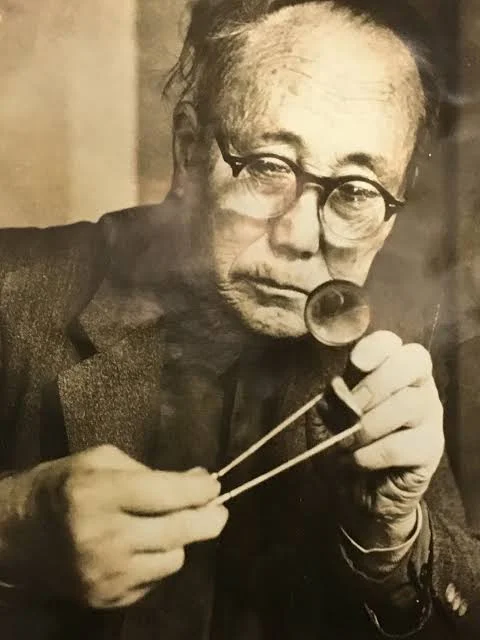
Although not a formal scientist, he dedicated himself to studying the life cycle of the Genji firefly directly in its river habitat. From this, he succeeded in uncovering the food chain of its larvae, which consume certain river snails. Minami conducted his research from 1919 to 1920 and afterward continued the same research until 1961.
In the 1920s, Minami succeeded in discovering a method of captive rearing of fireflies for the first time. In 1961, Minami then published a book titled "Research on Fireflies" which summarized the results of his research and observations over 40 years.
As a result of his discovery in 1920, Minami began releasing the fireflies he had bred in captivity back into the rivers to restore their population. Minami also taught this technique to the people of Moriyama, turning it into a mass movement. Villagers were trained to stop hunting fireflies and to protect the sustainability of the rivers.
This later became a tradition that continues to this day. The technique Minami discovered was adopted by schools into their curricula. Schoolchildren are taught to raise fireflies in the classroom and, once they have multiplied, release them into river habitats. Although the number of fireflies in Japan today is still not as great as it once was, the conservation approach put forward by Minami can be considered a success.
So, for those of us who may have no idea how to breed them, perhaps we can first learn about it so that we can act later, while doing small things that have a considerable impact. For example, keeping rivers and ditches clean, reducing the use of pesticides and synthetic fertilizers, and not catching or relocating fireflies without good reason. Turning off outdoor lights at night, directing light downward, planting native plants in the yard, and letting it grow a little bushy are also said to be things that can affect their existence.
After that, what we must do is pass it on to others. Just as Minami educated the people of Moriyama, firefly conservation will be far more effective when done together, whether in a community or a village. Breeding efforts in particular will be quite limited if carried out by an individual alone, without a forum or a unified group.
EPILOGUE
Fireflies indirectly teach us the meaning of "hope". When the night becomes very dark, with no moon or stars in the sky, a glimmer of glowing light like a firefly's looks incredibly bright. In the same way, when we find ourselves on a very dark path, a glimmer of hope becomes enormously meaningful.
This lesson, it turns out, was also recognized by the ancient Amazon peoples. They believed that the light of fireflies came from gods who gave hope and guidance to people lost in the forest at night and suffering from thirst. The light of fireflies was believed to lead them to a source of water. This was not entirely a fantasy, because fireflies do indeed live in wet areas where water is present.
It does not stop there; fireflies continue to teach us hope even when they are faced with the threat of extinction. In that deeply worrying situation, they indirectly gave rise to a savior, Kiichiro Minami, who became a hope for their species in Japan and who can be emulated by other countries around the world.
To anyone who has ever been enchanted by the flicker of tiny lights in the night:
Fireflies do not ask for a vast space. They only ask for clean rivers, damp soil, calm darkness, and time to grow undisturbed. Simple things that once existed everywhere have now become an increasingly rare luxury.
It is not too late. The light that has begun to fade can shine again if we unite to protect it. Not with magic, but with something even greater, the same power as our weapon when facing the alien invasion discussed in the previous article (read >>>> The Real Alien Invasion), namely "awareness".
Perhaps we cannot save every place at once. But in our yards, in our villages, in the rivers near our homes, that is where recovery begins. Perhaps next year, or two years from now, children will stand in the yard and point toward the trees, exclaiming: "Mom/Dad, why are those grasses glowing?"
That is the most beautiful gift we can leave behind, not glittering treasure, but a light that keeps shining in the peaceful night.
"We do not inherit the earth from our ancestors; we are borrowing it from unborn children."
— Antoine de Saint-Exupéry
REFERENCES
detikcom, 2026. Are we the last generation to see fireflies? 5 April. Available at: https://detik.com [Accessed: 3 November 2026].
IPB University, 2026. Fireflies are increasingly rare, IPB expert: an alarm of declining environmental quality. 19 June. Available at: https://ipb.ac.id [Accessed: 3 November 2026].
IUCN, 2026. Conservation status of the family Lampyridae. Available at: https://iucn.org [Accessed: 3 November 2026].
Lee, C. (2021) 'Japan tries to save fireflies before their cherished light goes out', Zenbird.media, 19 July. Available at: https://zenbird.media/japan-tries-to-save-fireflies-before-their-cherished-light-goes-out/ [Accessed: 5 November 2026].
Lewis, S. (2017) 'For the sake of their glow: Japanese fireflies, overexploited for their beauty, were nearly loved to death. Are others in danger of the same fate?', Undark, 1 June. Available at: https://undark.org/2017/06/01/sake-their-glow-moriyama-japan-fireflies/ [Accessed: 5 November 2026].
RRI, 2026. Fireflies are increasingly rare, where has nature's little light gone? 26 September. Available at: https://rri.co.id [Accessed: 3 November 2026].
RRI, 2026. Fireflies are increasingly rare, learn the causes and conservation efforts. 31 October. Available at: https://rri.co.id [Accessed: 3 November 2026].
Yoursay.id, 2026. Where have the fireflies gone? Uncovering the ecological crisis behind light pollution. 24 September. Available at: https://yoursay.suara.com [Accessed: 3 November 2026].
Zhu, C., Lu, X., Cai, T., Zhu, K., Shi, L., Chen, Y., Wang, T., Yang, Y., Tu, D., Fu, Q., Huang, J. and Zhen, Y. 2024. Firefly toxin lucibufagins evolved after the origin of bioluminescence. PNAS Nexus. 3(6): 215.
Viva DIAZ