Reflection
The Urgency of the DIKLATSAR OPA DIAZ?
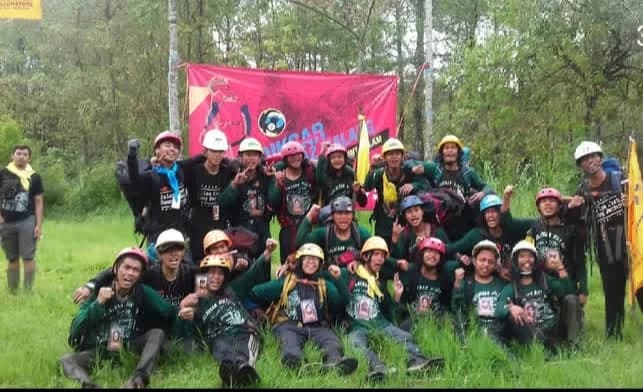
DIAZ member Irwan said: "One of the functions of training is to refresh one another's memory of the material, while also digging deeper and generating ideas to improve and process neglected literacy memories. Training also serves as a tool for building humane communication among members; it is, so to speak, a small-scale but quality reunion."
Training (diklat) plays a vital role in sustaining the lifeblood and organs of Diaz and in developing its members. This process aims not only to produce competent new cadres, but also to serve as a space for growth that strengthens ties of friendship, builds a sense of korsa (a spirit of togetherness), and provides a place to exchange ideas when members want to share the best concepts they have gained from outside the organization. It is in this space that the values of collectivity, together with these many ideas, can be nurtured among the members.
Spaces like this need to keep being developed. Borrowing the idiom of the gerdu (neighborhood watch post) chat, where people like to brag and daydream, turns out to be very necessary, even if it is sometimes not quite logical given today's circumstances. It recalls several articles in Chinese media reporting that universities have opened up new fields of study, one example being a major in imagination literacy. Generating ideas and opening up channels for them turns out to be necessary as a reminder, and as a way to put the brain's algorithms back to work in a healthy manner, reducing dementia.
Diaz member Irwan said: “One of the functions of diklat is to remind one another of the material while digging deeper, generating ideas to improve and process neglected literacy memories. Diklat also becomes a tool for building human communication among members; you could call it a quality, low-key reunion.”
In the dynamics of the Diaz organization, diklat serves as a bridge connecting the older generation with the new one, ensuring that the transfer of knowledge, experience, and organizational vision is never broken. That is why diklat is a continuing curriculum as well as a long-term investment for the shared progress of all members.
Building communication that is equal and of high quality certainly requires a space for listening to ideas and a space for voicing them, based on the principle of symmetrical equality, so that each member's abilities can be explored without fear of being dominated. Shared courage is needed in order to understand one another. Take Wak Gojel, who seems to represent the young members, yet whose words are also interesting as a point of balance: “The young members actually already understand and comprehend. It can be rather painful when they are compared with others, and uncomfortable with a manner of speaking whose polite phrasing doesn't use much vocabulary, so it feels bland.” Perhaps this is true. It happens because young members do not yet have a channel for speaking more plainly.
Despite its strategic role, the results of diklat do not always turn out ideal or appear instantly, just like the process of formal education in general. Some participants develop rapidly in absorbing the material, while others need more time to truly understand it. It is not uncommon for outcomes to fall short of expectations; this can be influenced by internal factors such as an individual's lack of motivation, or external factors such as training methods that miss the mark. Or who knows, perhaps they have found another passion that is more promising and offers more opportunity.
So, can the success of diklat be seen in essential terms? Looking at the development curve, there should be an upward trend, namely when every Diaz member keeps growing by developing the knowledge gained within the Diaz community.
Yet that is precisely where the essence of diklat as a holistic learning process lies: its success is measured not only by the achievement of technical skills, but also by each individual's ability to reflect on all their experiences, both pleasant and full of obstacles, as a “vaccine” that strengthens the self.
For some people, both inside and outside the organization, diklat may seem like mere formality. But for those who recognize its potential, diklat is a laboratory of life that provides three main assets: knowledge (cognitive), skills (psychomotor), and networks of relationships (social). These three become the foundation for facing challenges in any environment, whether in a professional or personal context.
In other words, diklat, and continually putting oneself through diklat in Diaz, is a “guide map” that helps each individual defend themselves while continuing to develop amid the dynamic changes of the times.
Viva DIAZ